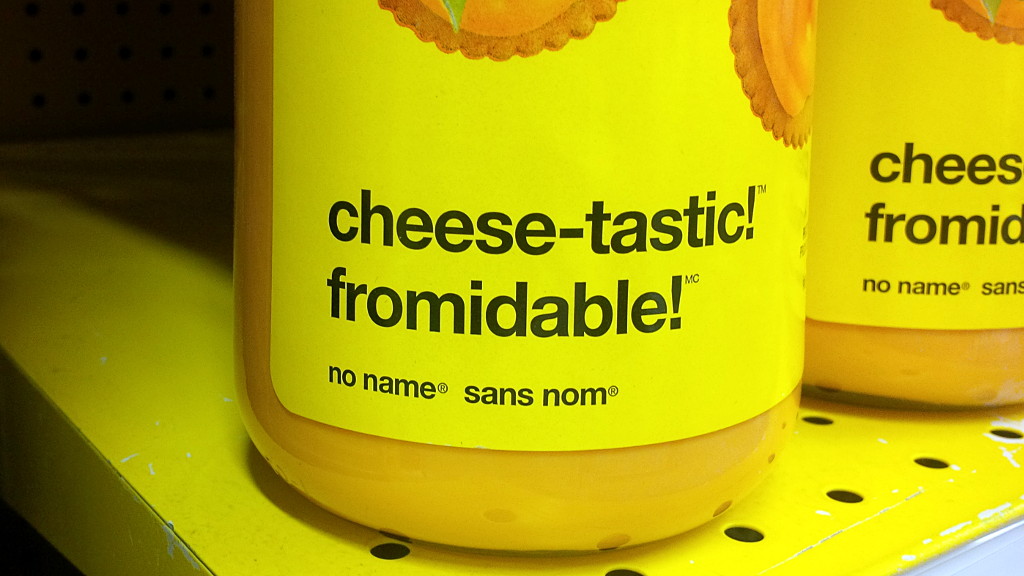
“Cheese-tastic” is a passable name for this Cheez Whiz knockoff at Loblaws, but the French version is amazing. “Fromidable!” indeed.
Random Wanderings and Wonderings
“Cheese-tastic” is a passable name for this Cheez Whiz knockoff at Loblaws, but the French version is amazing. “Fromidable!” indeed.
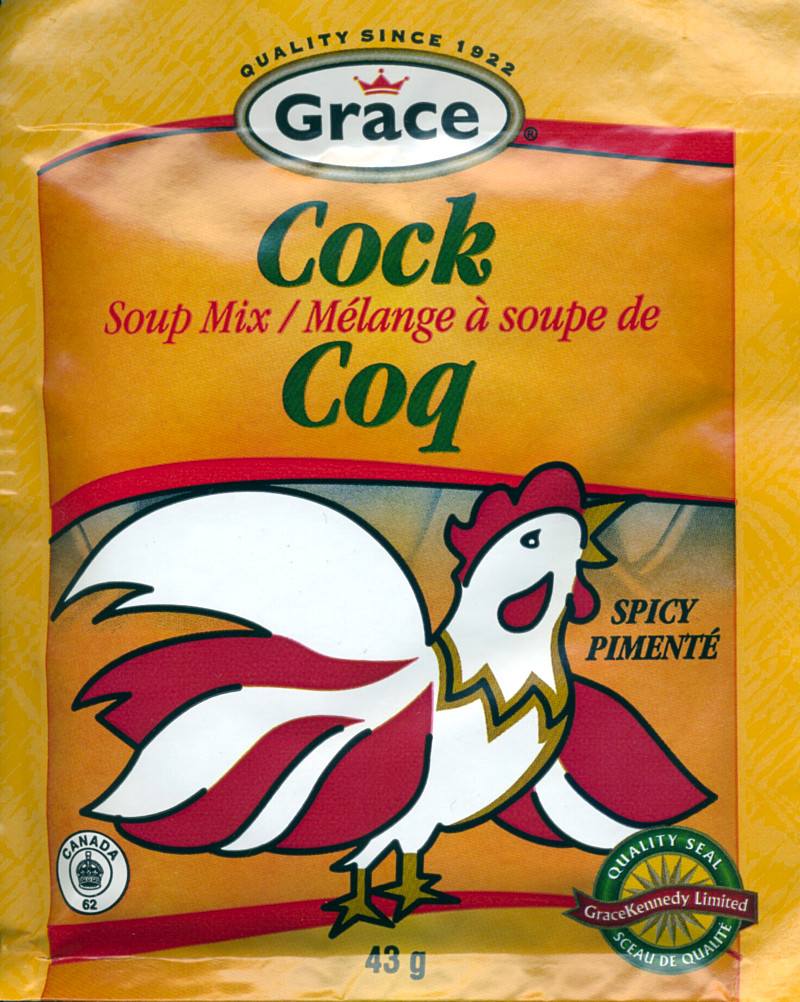
If you’ve ever wondered, Spicy Cock soup has just 40 calories and 31% of your recommended daily sodium intake per serving. Not that there’s anything wrong with that.
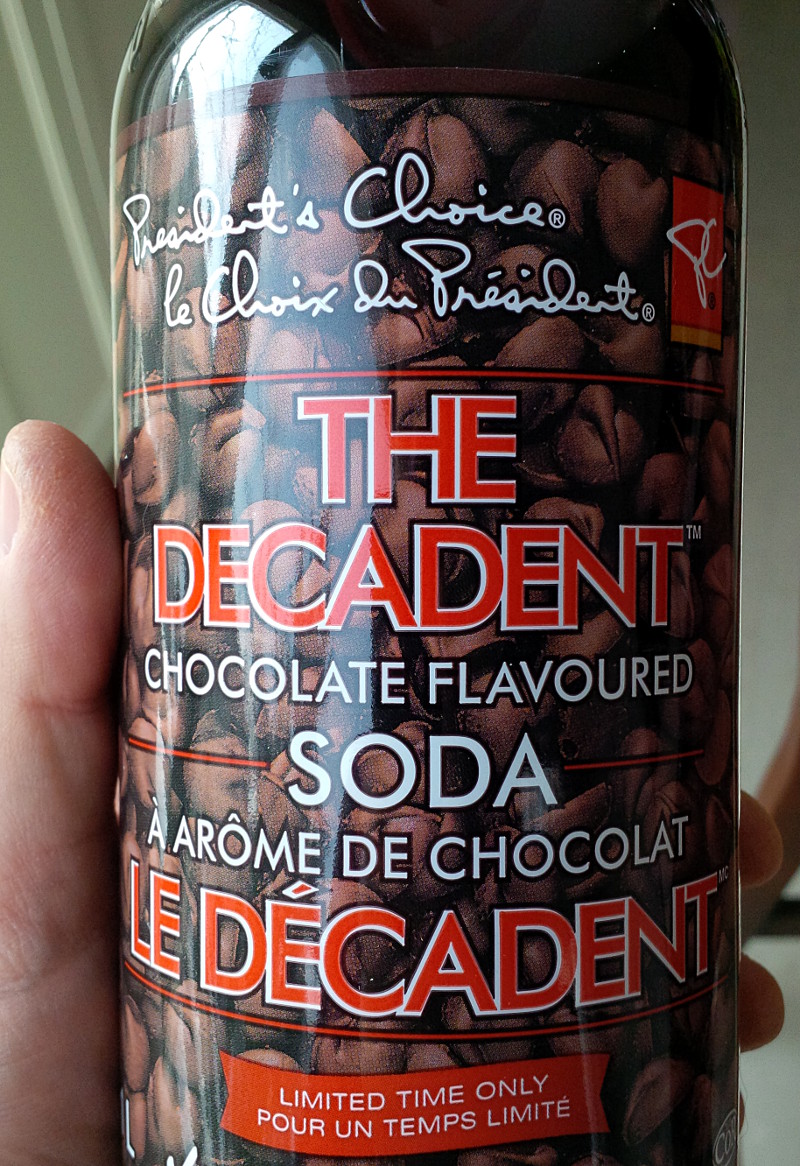
I saw a row of President’s Choice Decadent Chocolate Flavoured Soda bottles on a shelf at Loblaws around Christmas and had to pick one up to Risa’s vocal disapproval. It’s for science, I told her. Think of the kids whose lives would be immeasurably improved if I, instead of they, drank this limited-availability monstrosity. Well, it finally made it into my testing lab and it’s not quite what I expected. Oh, in at least one way it’s exactly what I hoped it would be: a vaguely disgusting carbonated concoction that would slip past my lips once and never again tempt me to slip a fiver to the store clerk who would quietly slide my shame into a plain paper bag so that I could secretly imbibe on my way home, the sugar rush dulling the self-flaggelation over my lack of willpower. It’ll never happen again, I’d tell myself. Until the next time.
Instead, this is disgusting in a way that I didn’t expect. I had expected it to taste like a bad imitation of a chocolate chip cookie dipped in Coke, a guilty pleasure I enjoyed far too often during my youth. And since I love (but now rarely touch) both Coke and chocolate chip cookies, I was quite looking forward to the can of whoop-ass I was about to open on my senses.
Upon unscrewing the lid, I was almost overcome by the twin smells of caramel and chocolate, as if I’d dropped a bag of chocolate chips into a warm mug of Kraft Caramels. The taste was much closer to drinking a sickly sweet box of Pot of Gold chocolates than any cookie I’ve ever had. The after-taste was a medley of mint and disappointment, not at all dissimilar from a late-night hunt through the pantry looking for sweets and finding only a stash of After Eights.
It’s definitely flavourful, but not in a very good way. They would have been better served by selling Coke in a wide-mouth bottle with a couple of chocolate chip cookies for dipping strapped to the side. The hunt for a carbonated mashup that’s actually good continues.
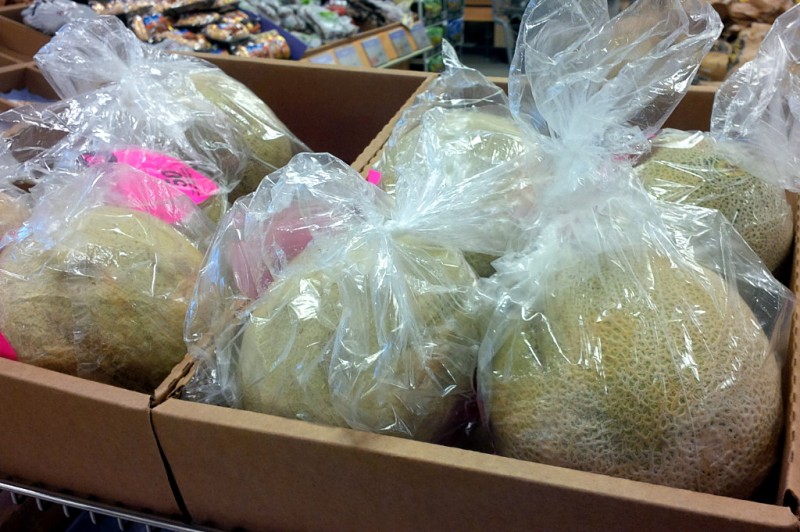
When nature’s wrapping just isn’t enough.
No longer content with wrapping each little mandarin in its own plastic packaging, the East Dodgeville Loblaws had a rack of individually wrapped cantaloupes on display this weekend. The good news is that many more products are ready for this kind of innovative packaging. I can’t wait to see what they come up with next week.
Don’t be distracted by the “50% off for quick sale” stickers; these melons are lovingly pre-ripened for your convenience.
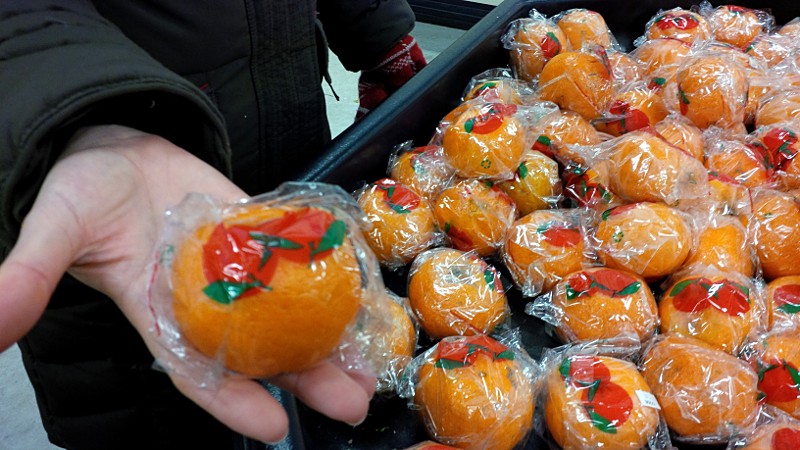
So the East Dodgeville Loblaws is now carrying individually wrapped mandarins. I’m not sure why these little oranges need to be wrapped in plastic when all of the other ones seem to survive just fine in nothing but the all-natural, easy-open, biodegradeable, and universally identifiable wrapping that’s built-in at the factory, but there you go. Another product innovation from the people who brought you individually tagged mushrooms.
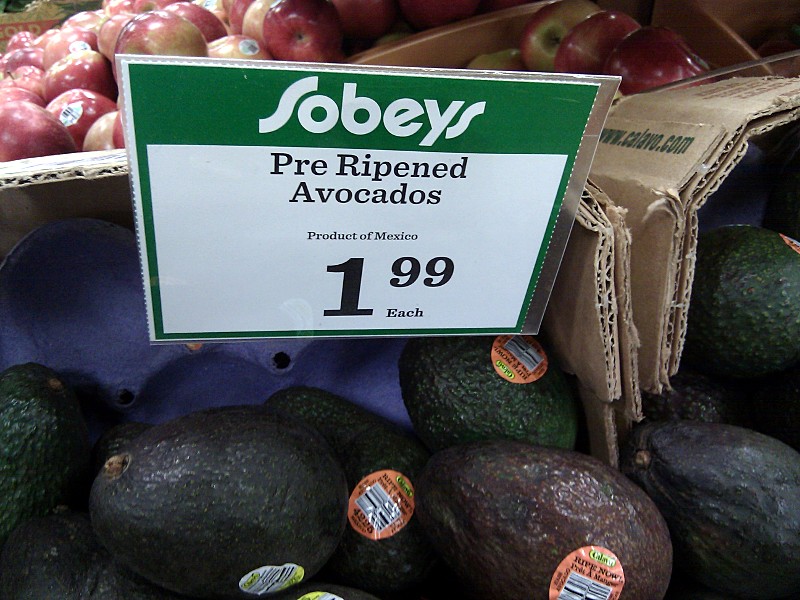
Or as we say in English, “Ripe avocados.”
Increasingly, supermarkets are ripening my fruit for me. Tomatoes are vine-ripened, peaches and nectarines are tree-ripened, and now avocados at Sobeys are, uh, pre-ripened, as if they’re doing me some kind of favour. It’s funny how only avocados get this odd notation. Mind you, I’m sure that the “pre-ripened” sign will result in more sales than the equivalent “50% reduced for quick sale” over at Loblaws. The wonders of marketing: convincing you that they’re doing something revolutionary while selling you the same thing you’ve always been buying. Of course, the downside to this wonderful new pre-ripening service is that I now have to go to separate bins to buy avocados for today and Sunday.
Meanwhile, I’m still ripening all of my pears and bananas on my own. I feel that Sobeys just isn’t doing enough to meet my pre-ripened fruit needs.
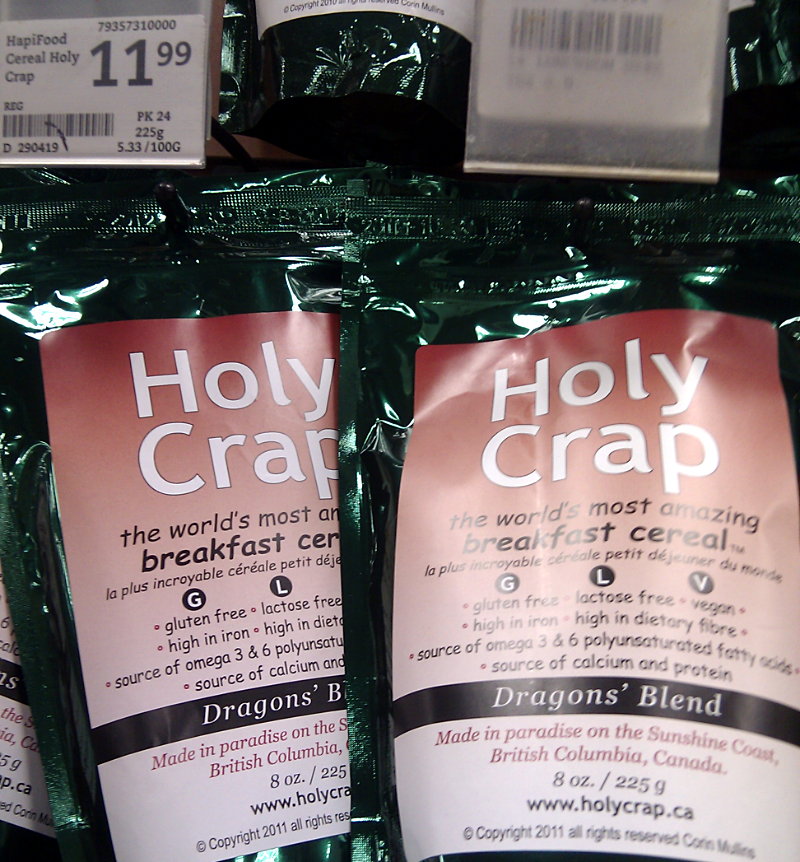
This cereal is supposed to be so good that it was a virtually instant deal on Dragons’ Den. The name refers to its laxative effects but as far as I’m concerned it refers to the price: twelve bucks for 225 grams? My cereal of choice is already one of the most expensive options in the supermarket at $7 for a 540g box, and Holy Crap is almost twice the price for less than half the product. Holy Crap! I’m not averse to spending money on a high-quality product but four times the price of a premium cereal that is itself already twice the price of everything else seems a little rich. I’m also not quite sure what I’d do with the suggested serving size of two tablespoons, which is maybe a tenth the size of a proper bowl of cereal. Eating it also seems to require adherence to instructions or advance preparation far beyond what my fuzzy brain is willing to deal with in the morning. Despite more than a little curiosity, the great name, and the fact that it’s a Canadian company, I just can’t bring myself to spend $12 on a taste. Maybe if they offered me a free sample…
Shortly after posting Tuesday’s mini-rant about Loblaws PC Organics yogourt, I received a second reply from Loblaws customer service:
Dear Mr. Dodge,
Thank you for taking the time to pass on your comments regarding our PC Organics Strawberry Fruit Bottom Yogurt. We apologize for the delay in our response as we’re experiencing higher than normal volume of emails.
I was disappointed to hear that this product did not meet your expectations. Our product development team re-evaluates products on an ongoing basis and customer feedback such as yours is very valuable to them during that process. Accordingly, I have communicated your comments to them for consideration during their next review of this product.
Mr. Dodge, we appreciate hearing from you. Please continue to let us know how we’re doing, as your feedback is one of the best ways for us to improve.
There’s still not much to go on here, but at least now I know that my complaint didn’t fall into a generic “website feedback” black hole never to be seen again. I know I left my complaint during the holidays, but two weeks for a response is pretty sad. It’s the Internet equivalent of keeping me on hold for two hours while telling me over and over again how important my call is.
I’m also struck by the timing of the reply: after waiting for two weeks for a proper acknowledgement of my feedback, this more appropriate response arrived barely two hours after I posted yesterday’s article. While that could be coincidence, it seems just a touch too convenient.
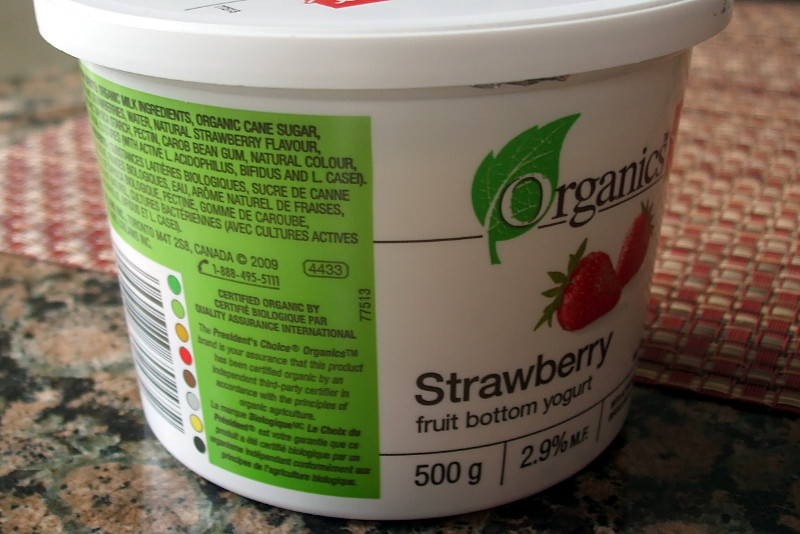
Just before Christmas and not even a week after writing about fake milk products, I bought a tub of my regular yogourt, President’s Choice Organic strawberry fruit-bottom yogourt, to be met with a nasty surprise when I opened it up at home a few days later: a new recipe and a substantial downgrade in quality. The taste and texture were all wrong and it left a chemical aftertaste that lingered until I brushed my teeth to get rid of it. I didn’t have to look far to see the culprit: “organic milk ingredients” at the top of the new ingredient list versus the “ultrafiltered partly skimmed organic milk” that headed up the old formula. Foiled again!
Thoroughly disgusted with both the new product and the fact that I hadn’t thought to verify the ingredients on the new container before I bought it, I submitted this feedback on the President’s Choice website on December 28:
I’ve been enjoying PC Organics Strawberry Fruit Bottom Yogourt for a number of years but have been disappointed with the new formulation that has recently replaced the older flavour. To be charitable, it tastes awful. It also leaves an equally unpleasant aftertaste, has a lumpy texture reminiscent of cottage cheese, and features a fruit bottom that neither looks nor tastes real. In short, it’s a considerable step down from the PC Organics yogourt that I was buying just three months ago.
I was not surprised when I checked the ingredient list on the new tub and saw that the first ingredient is now “organic milk ingredients” rather than the “ultrafiltered partly skimmed organic milk” that headed up the much better previous version of this product. If you think that consumers don’t notice the difference, you’re sadly mistaken. You are also sadly mistaken if you believe that the change in serving size will mask the increase in carbs and decrease in fibre in the new formula.
I’m disappointed that President’s Choice is sourcing cheaper ingredients and not directly informing consumers that the formula has changed in this way. I will not be buying PC yogourt again, and will be examining more closely the labels of any other PC products that I buy in the future.
I checked the “response required” box and sent it off. I got this response early in the new year, posted in its entirety (minus the French translation):
Thank you for visiting our website.
Our Customer Service hours are Monday to Friday 8:30 am to 5:30pm EST.
Please note that Customer Service will be closed on Monday December 26th.
This email message is confidential, may be legally privileged and is intended for the exclusive use of the addressee. If you received this message in error or are not the intended recipient, you should destroy the email message and any attachments or copies, and you are prohibited from retaining, distributing, disclosing or using any information contained. Please inform us of the delivery error by return email. Thank you for your cooperation.
So a customer who spent more than half of his total food expenses in 2011 at Loblaws expresses his dissatisfaction and all he gets in return is “thank you for visiting our website” and “we will be closed for one day, a week and a half ago”? Well, I still have another tub of this crap sitting in the fridge; maybe I’ll return it to the store this week. I’m certainly not going to eat it.
[January 11 update: I got a second response from Loblaws shortly after posting this article.]
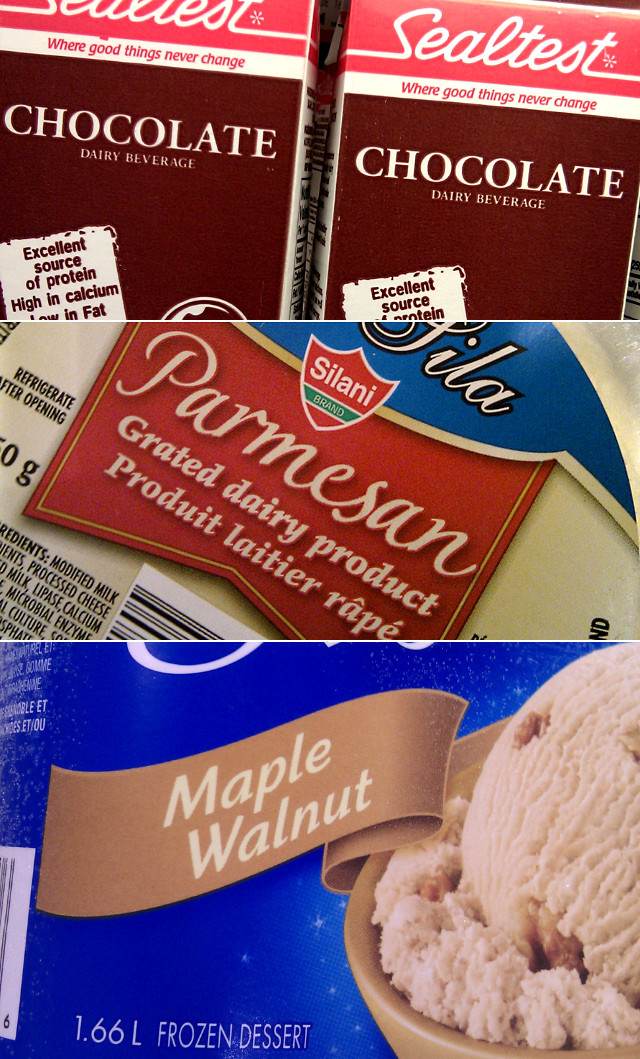
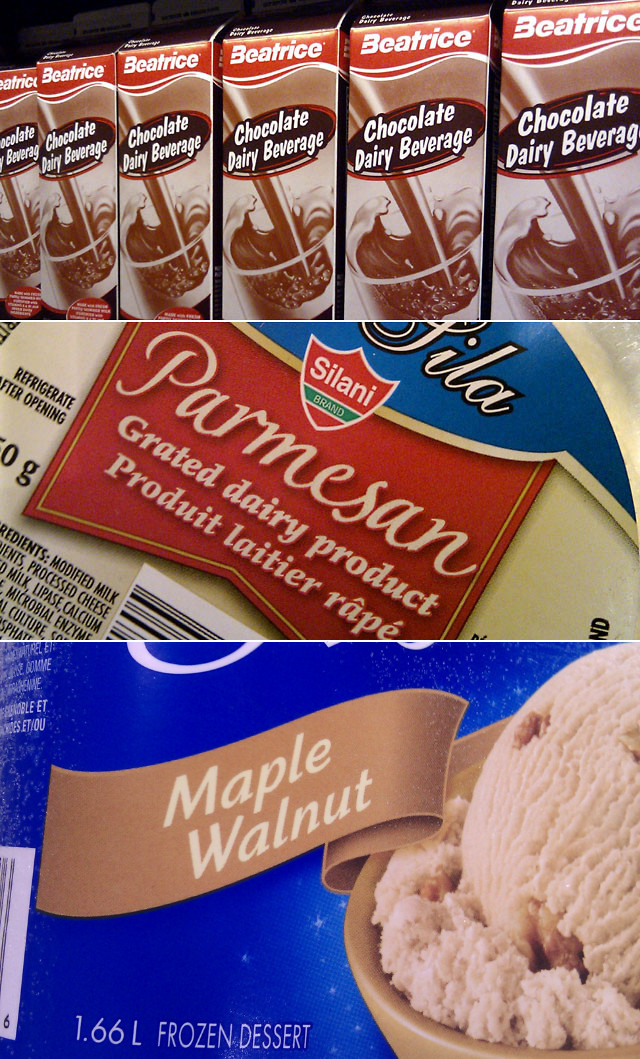
Chocolate dairy beverage? Grated dairy product? Frozen dessert? Isn’t anything made with milk, cheese, or cream any more? I hate to sound like a grouchy old man (though I’m rapidly becoming one), but when I was a kid, these things were called chocolate milk, grated cheese, and ice cream. Instead, more and more items in the dairy case have “modified milk ingredients” at the top of the ingredients list. It makes me wonder where all of the real dairy products go.
Of course, these products are not exactly new, having been around in one form or another for a few years. They are clearly part of the accelerating trend in the grocery store to pass off fake food as the real thing.
I didn’t buy either the dairy beverage or the frozen dessert, so I can’t review their taste. But I didn’t notice that the “grated dairy product” wasn’t actual cheese until I got home, so I can review that: it was so salty that it was inedible. Other than the texture, a dash of Silani grated dairy product on some pasta was basically indistinguishable from emptying a box of salt onto the plate. Even the Loblaws No Name Parmesan is superior.
While most “food” manufacturers take pains to hide the fact that they’re hiding the facts from you, Beatrice was notable for positively trumpeting the non-milkiness of their dairy beverage:
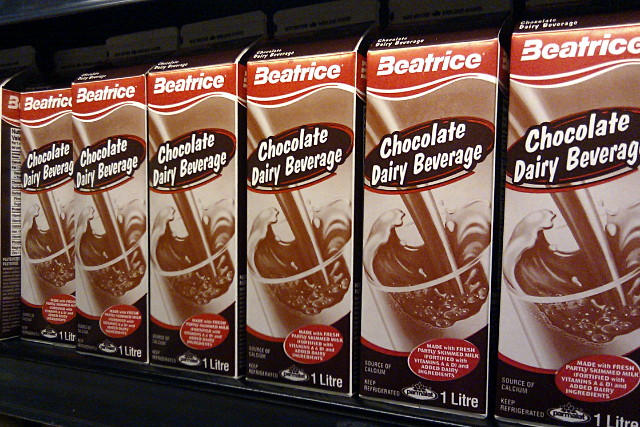
The text in the red circle says that it’s made with real milk “and added dairy ingredients.” It sounds about as appetizing as eating a burger made from beef and added cow ingredients. Beatrice may have learned its lesson after a few years of trying to sell this stuff and returned to selling chocolate milk again earlier this year.