Posted in Wildlife on October 5, 2008 No Comments »

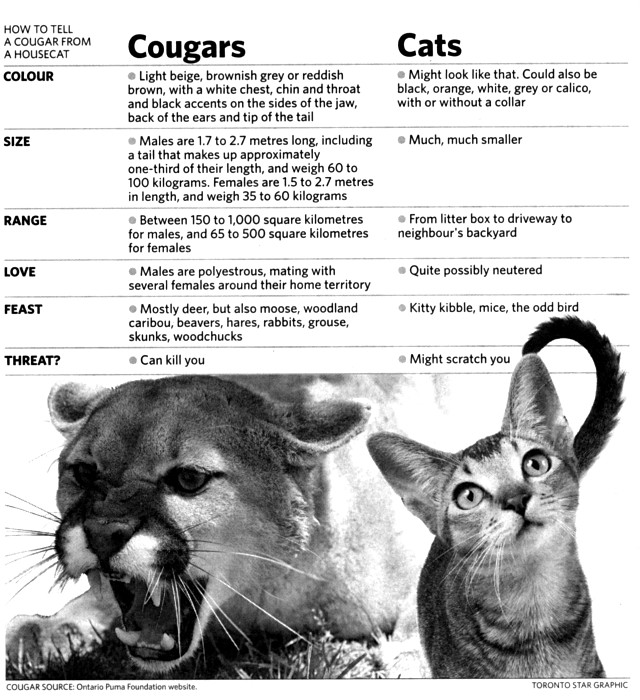
From yesterday’s Star, the above graphic (also available as a too-small PDF) accompanied a story about cougar sightings in Ontario. The relevant sentence from the story:
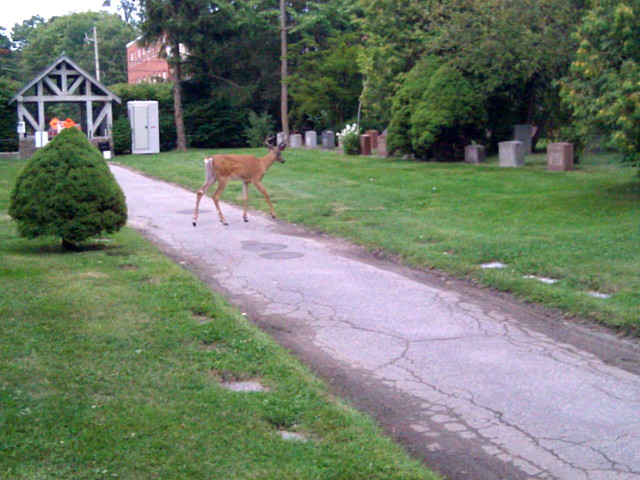
Some of the animals commonly mistaken for cougars: deer, lynx, coyotes, fishers, dogs, and house cats. Big ones.
Coyotes, I can understand. Lynx? Sure, why not. Deer? Okay, but only if the spotter has never seen a cat of any kind before. House cats? Seriously? You’ve got to be seriously spooked if you’re confusing your neighbour’s kitty for a cougar. Then again, if you have any giant mice hanging around your house, you’d probably want a giant kitty for protection.
Original graphic from the Toronto Star.
Permalink

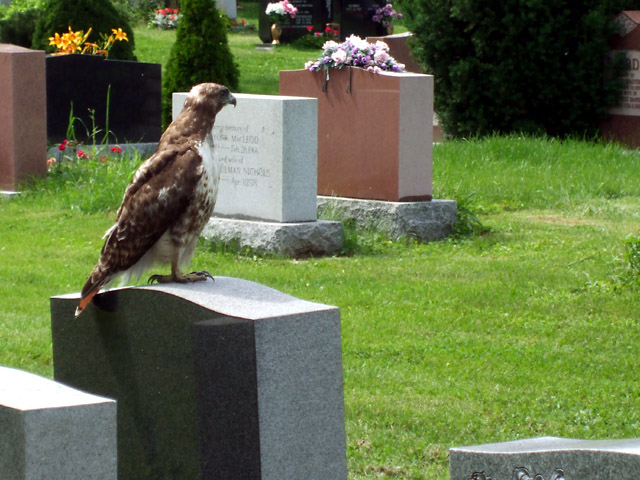
This red-tailed hawk seemed to be concentrating on something as I walked past this afternoon. A companion? Some potential prey? Another top predator, perhaps?
(more…)
Permalink

Awwww.
What are you, made of stone?
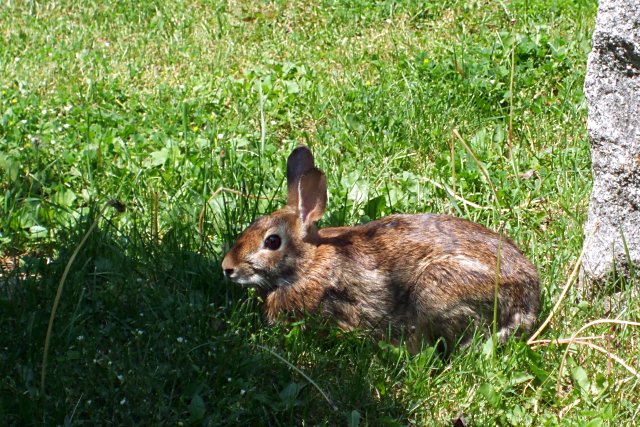
This rabbit lives in Mount Pleasant Cemetery. There was also a groundhog hiding under a bush about a metre out of this shot. It kind of makes you wonder what kind of sturdy underground home groundhogs and rabbits could find in a cemetery.
Permalink

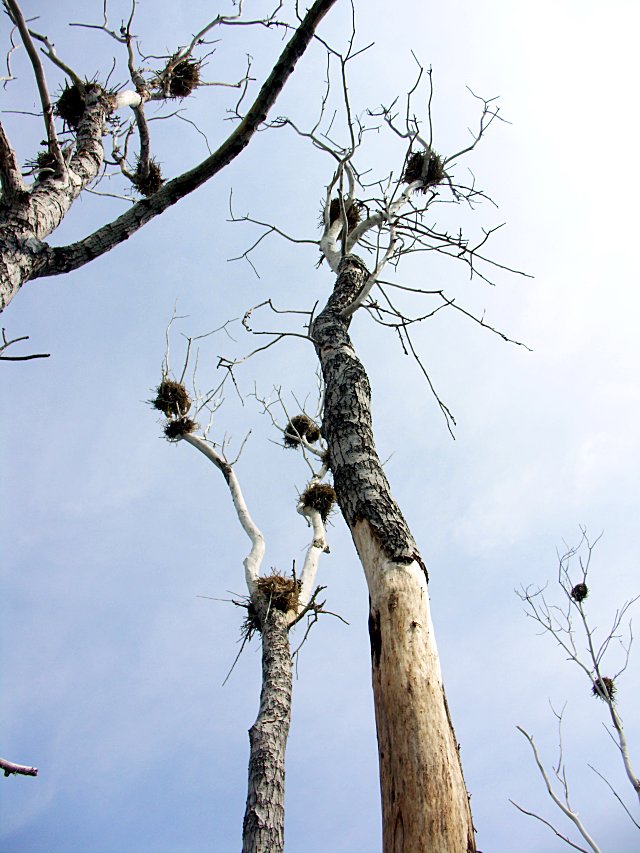
Winding up our Spring on the Spit series, this photo was actually taken early in the fall, after nesting season is over and the cormorants that nest in these trees have abandoned them for the season.
The area that contains these trees is off-limits to people during nesting season (April through August, if memory serves). After all, cormorants are Important Birds and need their privacy. Exploring this area each autumn, I always think it’s a shame that cormorant droppings destroy the habitat here. I’d like to think that it’s all part of nature’s cycle, but it’s possible that there are just too many cormorants here doing too much damage. It’s an eerie place to walk through when the birds are gone, and it looks like a war zone to boaters in the Outer Harbour.
Toronto and Region Conservation is hosting a public meeting on April 3 (PDF notice) at the Mennonite New Life Centre on Queen Street East to discuss possible approaches to cormorant management in Tommy Thompson Park.
Permalink

This old Quonset hut is familiar to anyone who has gone for a stroll or bike ride on the Leslie Street Spit. Shawn Micallef wrote an article in the Star last fall about the history of Quonsets in general and this one in particular:
Above the front door are the faded words “Testing Building.” It once housed the Toronto Port Authority’s gauge for measuring lake levels.
It has played a role in films over the years, including Bulletproof Monk and Canadian Bacon. For the 2006 Michael Douglas film, The Sentinel, it was converted into an east coast fishing shanty, complete with lobster traps.
Shawn also reports that the Quonset will be demolished and a proper visitor centre erected in its place. Although the building is obviously past its best-before date, I’ll still miss it when it’s gone.
Tomorrow: the final edition of Spring on the Spit.
Permalink

There’s a good-sized beaver lodge not too far from the southern tip of the Leslie Street Spit. It’s in the pond behind these trees, just out of camera view. Even if you miss the lodge during your visit, you can’t miss the work of its residents throughout this section of the park. The tree in the foreground of this picture has a large pile of fresh shavings at its base and will probably be felled by the industrious beavers within a few days. Their impressive lodge is big enough to be seen on Google Maps.
I didn’t notice whether the beavers on the Spit have been tackling any trees as large as their Don Valley cousins have been.
Permalink

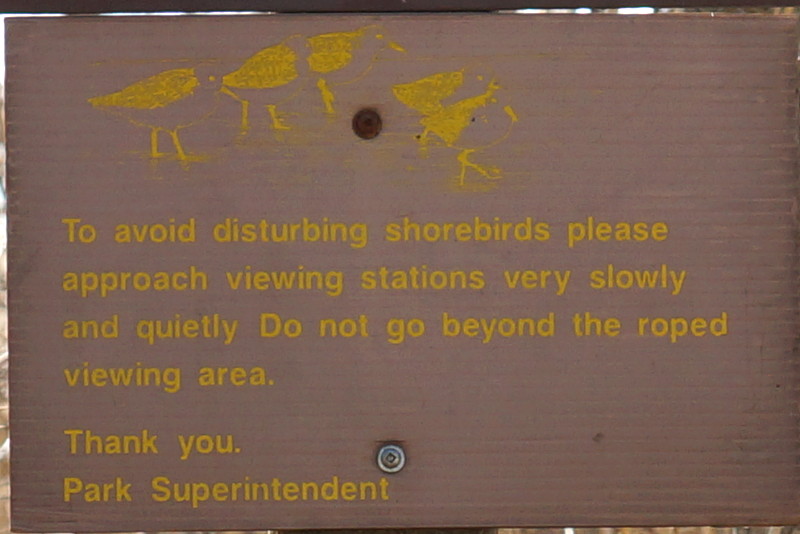
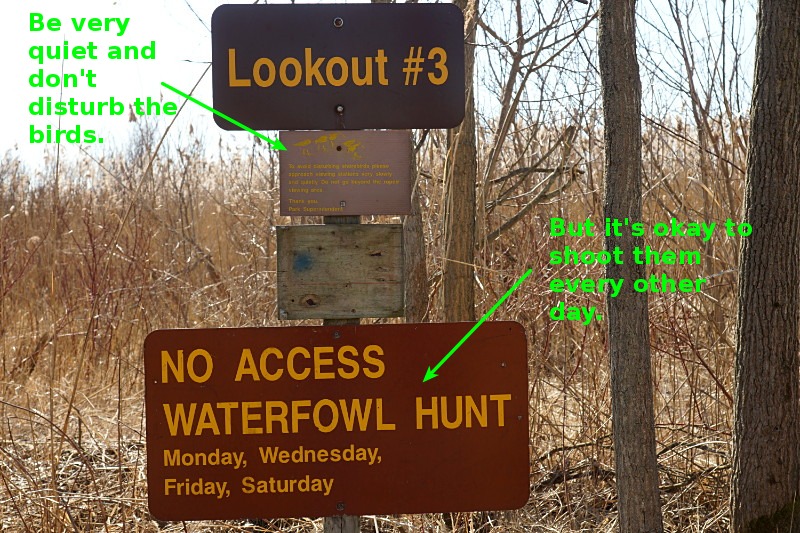
Even the Leslie Street Spit has gone all elitist, with this sign marking Tommy Thompson Park as being for Important Birds only. All of the unimportant birds (this means you, pigeons) have to stand around on the sidewalk outside the park all night waiting in vain to get in.
Permalink
Posted in Wildlife, Don Valley on August 18, 2007 No Comments »

It’s amazing what you can see during a lunchtime walk. I’m going to exercise my somewhat questionable bird-identifying skills again and proclaim this one to be a young Great Blue Heron. He stood on this rock in the middle of the East Don River in the Charles Sauriol Conservation Reserve for at least five minutes before starting his hunt for food nearby. More remarkable than this single bird though were the two deer that had been standing right beside him in the river. Naturally, both deer fled before I was able to get a clear picture. If you squint you can see one deer and the heron (both circled) in the shot below.

Permalink

You remember the Moose in the City, don’t you? For six glorious months in 2000 more than three hundred moose statues stood watch over Toronto, succesfully saving us from the shame of having flying pigs instead. Although some locals didn’t fully appreciate the fibreglass wildlife, I’d rather have the moose than any of the subsequent visitors to our fair city, including aphids, SARS, and Chilean soccer players.
Most of the moose had disappeared by the end of the year, but a few can still be found on display around the city. I recently stumbled upon this poor fellow behind the Ontario Science Centre, covered in dust and jammed up against a wall behind piles of discarded shipping pallets and recycling bins, begging for some dignity in retirement.
Time Moose Scape began life sponsored by none other than the very organization that callously threw him outside like so much trash. Oh, he tried to stay on their good side by getting a new paint job, donning a new suit and bow tie, trimming off his gangly antlers, and even going so far as to have a giant red clown nose surgically attached to his snout. It was all for naught. More enamoured by the latest plastination and big boat toys, Time’s masters cruelly cast the gritty seven-year-old out into the world to fend for himself.
Like any abandoned child, Time has remained close to the only home he’s ever known, scrounging for food and affection in the nearby recycling bins, eventually settling among the empty water bottles and flattened cardboard boxes. But despite the hard turns his life has taken, he keeps a smile on his face. That big red nose could have become a mark of his failure, but Time has chosen to wear it as a badge of courage. It proudly proclaims that one day he will be back among the adoring children inside.
A version of this article originally appeared on Torontoist.
Permalink
Posted in Wildlife, Don Valley on July 23, 2007 2 Comments »

Several months after writing about an ambitious beaver in the Don Valley, I finally got around to making a close-up visit to his meal at the forks of the Don. The trunk of this tree is about 70 cm (28 inches) in diameter and the Beav has eaten through about a third of it. The exposed band that you see here is about 45 cm (18 inches) tall. He’s eaten a lot of tree, but still has quite a bit to go before he can start the serious work of damming up the West Don. Good luck!
Permalink