Feed on
Posts
Comments

Archive for the 'Hidden Toronto' Category

Goin’ down the road

Goin’ down the road

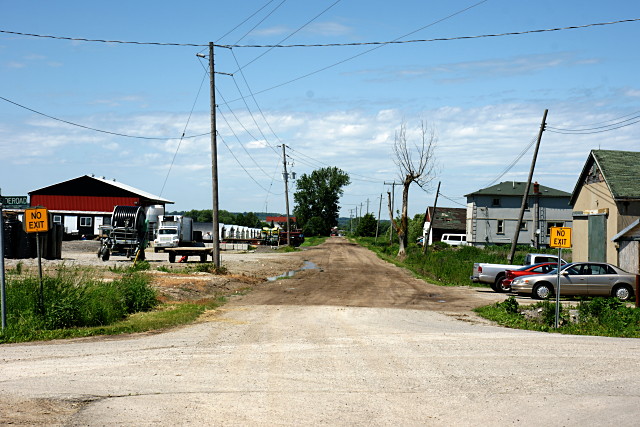
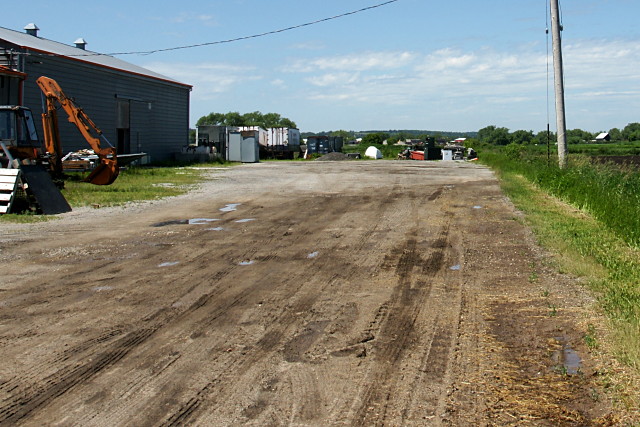
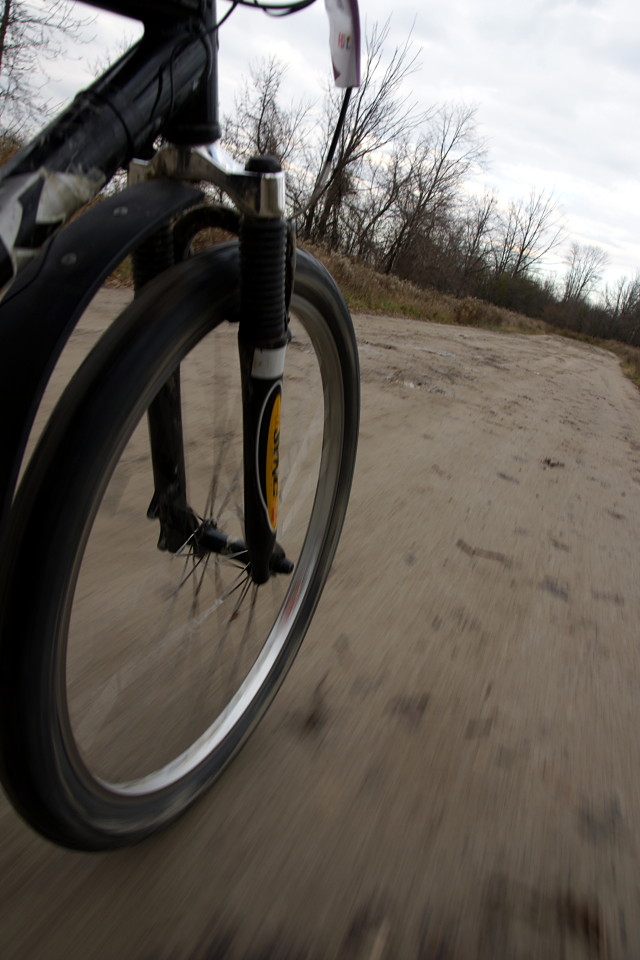
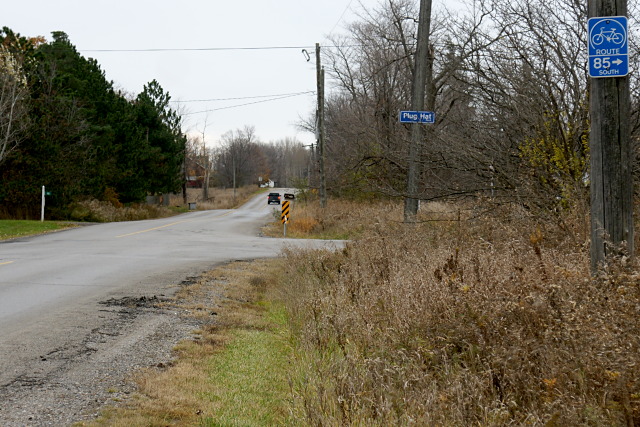
It feels like months since I’ve gotten out for a good ride but I was finally able to hit the (dirt) road yesterday, heading out into the farthest reaches of Scarborough. With the country roads, fields of corn, tangled meadows, and overgrown forests, you’d never know that you were still inside Toronto on the municipal street grid. But then you pass one of the familiar bike route signs (seen here at the rural intersection of Beare Road and the wonderfully-named Plug Hat Road) and you know that you’re still within reach of civilization:

Bikeway network signs at Beare and Plug Hat

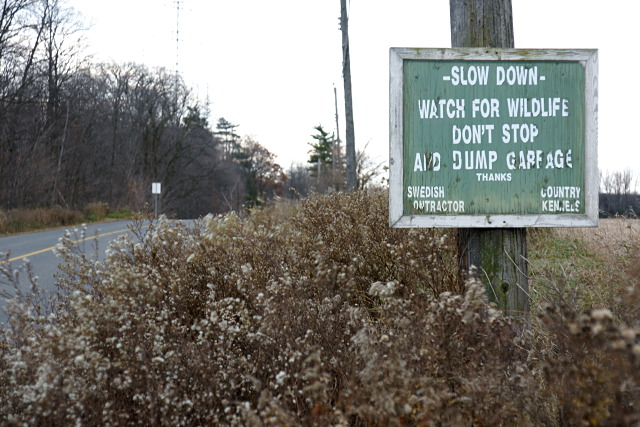
This isolated corner of the city is plagued by illegal dumpers and it shows in the informal signage along the roads:

Informal signage on Reesor Road

In the last couple of years, northeastern Scarborough and neighbouring northern Pickering has become one of my favourite cycling destinations. The best thing about riding there (or almost anywhere) at this time of year and in cool, rainy weather is that you basically have trails and roads to yourself.

Permalink

Old DVP on-ramp from York Mills Road

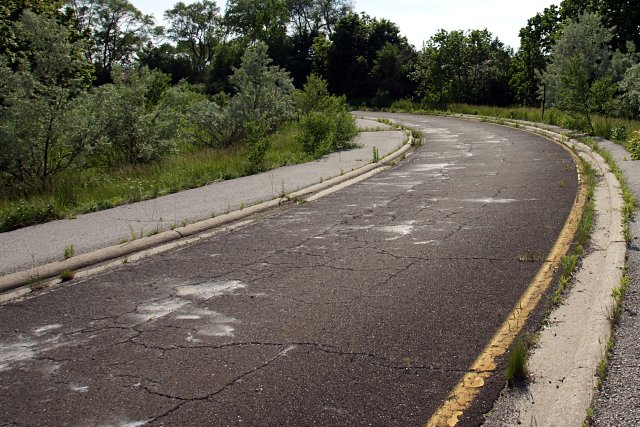
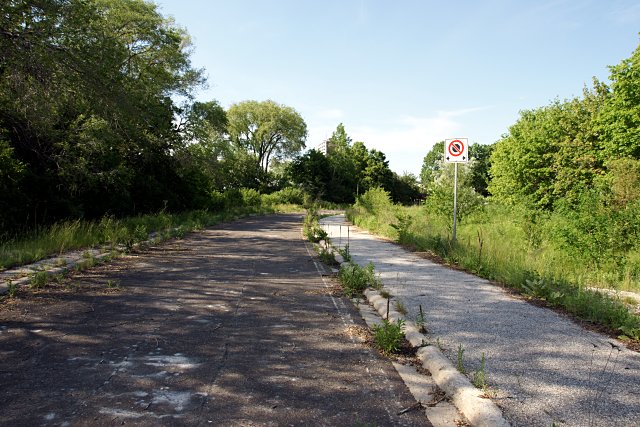
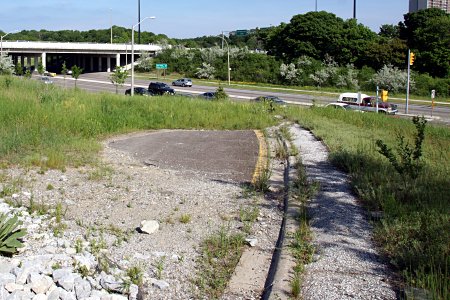
Driving down the DVP a couple of weeks ago, I noticed an old roadway cutting through the brush just north of York Mills Road. I had a pretty good idea of what it was, but a quick look at Google Maps confirmed my suspicion: it was an abandoned on-ramp to the southbound Don Valley Parkway from westbound York Mills Road. The current DVP ramps at York Mills were reconfigured during construction to the overpass beginning in 2005. The northwestern loop of the cloverleaf was removed entirely. Or was it?

Old DVP on-ramp from York Mills Road

I went back by bike last weekend (the same ride where I blew out a tire) to investigate and was quite surprised by what I found. Not only was virtually the entire ramp still intact, but there had been no attempt to restrict access to it. I was expecting to see the traditional Toronto chain-link fence surrounding the road, but all I had to do was ride up a little hill before I was greeted by the remnants of the ramp in all its glory. I’m not saying that there should be a fence, just that I was expecting one. Toronto officialdom is so paranoid about putting fences and warning signs around everything more challenging than a sidewalk that I never imagined for a second that it wouldn’t be all locked up.

Old DVP on-ramp from York Mills RoadAlthough the subsequent landscaping at York Mills Road put the ramp’s remnants out of sight, the bulk of the road still sits behind the embankment, where it’s being slowly consumed by encroaching weeds. The posts that held up corrugated beam safety barriers around the perimeter of the ramp were cut down to the ground and a stone-lined drainage ditch has been dug across the roadway, but the ramp is otherwise intact to within a few metres of the highway.
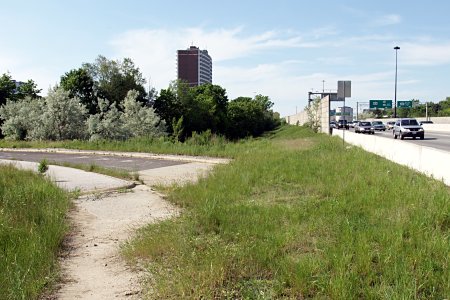
Although you’re never farther than 100 metres from either York Mills or the DVP, the curving tree-lined ramp quickly isolates you from both. Even with the sound of traffic in the background, it’s surprisingly relaxing.

Old DVP on-ramp from York Mills RoadThe current Google Maps image of the area, probably taken in 2005 or 2006, clearly shows an excavator perched at the very bottom of the ramp, presumably preparing to rip up the 50 metres or so of the roadway that was removed.

At some point, the now-unused land here will probably be sold off for—what else?—condos, and another little piece of Toronto infrastructure will disappear completely. In the meantime, this hidden corner of the city is being rezoned by the local flora.

A version of this post originally appeared on Torontoist.

Permalink

Indian Line looking north from near the CN tracks

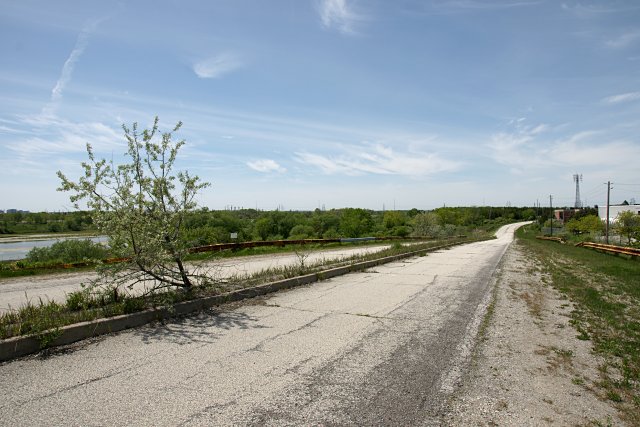
Way up in the very northwestern corner of the city, the old Indian Line used to mark the boundary between Etobicoke and Peel Region (Mississauga and Brampton). The road carved its way through farm fields and across a bridge over the Humber River before continuing north past Steeles Avenue. Most of the old road was effectively wiped out by the initial construction and subsequent widening and extending of Highway 427 starting in the late 1960s and continuing through the early 1990s. Other portions of the road fell victim to realignments of Albion Road, Steeles Avenue, and Regional Road 50 heading north out of the city. But as with other abandoned roads in the city, a few stretches of the old roadway still exist. A tour and more pictures follow.

(more…)

Permalink

Cormorant nests

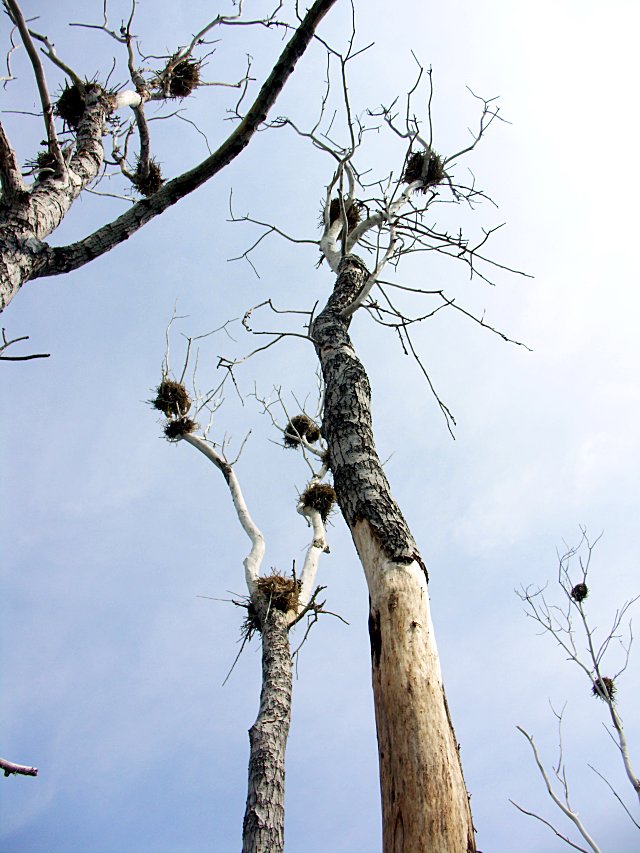
Winding up our Spring on the Spit series, this photo was actually taken early in the fall, after nesting season is over and the cormorants that nest in these trees have abandoned them for the season.

The area that contains these trees is off-limits to people during nesting season (April through August, if memory serves). After all, cormorants are Important Birds and need their privacy. Exploring this area each autumn, I always think it’s a shame that cormorant droppings destroy the habitat here. I’d like to think that it’s all part of nature’s cycle, but it’s possible that there are just too many cormorants here doing too much damage. It’s an eerie place to walk through when the birds are gone, and it looks like a war zone to boaters in the Outer Harbour.

Toronto and Region Conservation is hosting a public meeting on April 3 (PDF notice) at the Mennonite New Life Centre on Queen Street East to discuss possible approaches to cormorant management in Tommy Thompson Park.

Permalink

Beavers have done a real job on these trees

There’s a good-sized beaver lodge not too far from the southern tip of the Leslie Street Spit. It’s in the pond behind these trees, just out of camera view. Even if you miss the lodge during your visit, you can’t miss the work of its residents throughout this section of the park. The tree in the foreground of this picture has a large pile of fresh shavings at its base and will probably be felled by the industrious beavers within a few days. Their impressive lodge is big enough to be seen on Google Maps.

I didn’t notice whether the beavers on the Spit have been tackling any trees as large as their Don Valley cousins have been.

Permalink

Moon & pylon, Leslie Street Spit

Today’s spring picture from the Leslie Street Spit shows us an artfully-placed traffic pylon pointing up at last week’s waxing gibbous moon, already high in the sky in the late afternoon.

As an aside, I always used to think this phase of the moon was called a waxing gibbon until I was old enough to realize that the term would more accurately describe an ape with a Brazilian.

Permalink

Old ship’s bridge at the Outer Harbour Marina

Today’s photos of the Leslie Street Spit take us to the peninsula that contains the Outer Harbour Marina. The old ship’s bridge sitting on the peninsula’s tip is a familiar landmark to Outer Harbour sailors but is virtually invisible to most people visiting Tommy Thompson Park.

These pictures were taken in March 2004, before I had a high-quality digital camera. Looking at them reminds me just how much I miss Velvia and a proper fisheye lens. What I don’t miss is endless hours spent scanning slides. Still, I’m tempted to run a couple of rolls through the old camera this weekend. Maybe someday I’ll get a nice full-frame DSLR and have the best of both worlds.

Permalink

Brick Beach on the Leslie Street Spit

I usually start stretching my cycling legs around mid-March each year, getting ready for longer rides in the season ahead. Although I commuted and ran errands on my bike throughout this winter, I hadn’t been out for any pleasure rides of significant distance since November. But when that sun starts melting the snow and the days start getting longer, the call of the road becomes too strong to resist. I don’t care if it’s still cold and windy outside; my legs want to spin.

The Leslie Street Spit is my most frequent late winter/early spring destination. It’s one of the few car-free places in the city where you can ride at this time of year and not worry about dealing with snow and ice. It’s also among the most photogenic destinations with a wider variety of landscapes than you’d expect of a long finger of dirt in the lake.

This beach, for example, is made almost entirely of bricks. The constant action of the water has worn away most of the corners so they look like colourful bars of soap. A few feet in from the shore, most bricks still have rough edges. They get smaller and smoother as they get closer to the water. At the water’s edge, they look like colourful little pebbles. In a few years, this could look like just another sandy beach.

Old bricks on the beach, Leslie Street Spit

In the middle of this picture, you can see mortar still holding the remnants of two eroded bricks together.

I’ll have more pictures from the Spit in the days ahead.

Permalink

Snow mountain revisited

All of the heavy equipment was parked at the other end of the lot when I revisited the Unwin Avenue snow dump this weekend, so there’s not much in these photos to establish scale. The top of that pile of white snow at the centre of the picture above is about 8 feet high, if that helps. Enough of the snow has already melted that what’s left is indistinguishable from a pile of dirt from a distance. As the spring progresses, it’ll become indistinguishable from a pile of dirt even close up. All of this will be melting untreated virtually straight into the lake. The Don is also in for a rough spring and summer with melt from the snow dumps in the valley almost guaranteed to foul the river through July.

Unwin snow mountain with Hearn Station & smokestack poking out from behind

Tumour on Snow Mountain

Permalink

A mountain of snow from Toronto’s streets

Ever wonder where the snow goes after the parade of dump trucks takes it away? It goes to a dump like this one on Unwin Avenue, where the grey, brown, and black mess is currently piled at least four storeys high. Once here, it melts directly into the lake, releasing all of its contaminants untreated into the environment. Other dump sites drain directly into rivers and creeks before emptying into the lake.

Permalink

Next »